 WazzaBee
From October 1, 2026, WhatsApp service messages become paid: what changes and how to prepare
✦ Key takeaways
- •From October 1, 2026, WhatsApp service messages become paid
- •Timeline of changes
- •What a "service message" is and why it affects everyone
- •How much it will cost
- •What stays free
From October 1, 2026, WhatsApp service messages become paid
Until now, replies to a customer within 24 hours of their message were free. Meta has officially announced that starting October 1, 2026, these service messages will be charged. Below we go through exactly what changes, the key dates, and what businesses in Kazakhstan should do to prepare in advance.
Meta (the owner of WhatsApp) is publishing changes to the WhatsApp Business Platform pricing model. The key news for everyone who talks to customers through the official WhatsApp API: free service messages within the 24-hour window are coming to an end. Below are facts only, with links to Meta's original source, no speculation.
Timeline of changes
| Date | What happens |
|---|---|
| July 1, 2026 | Meta launched the Meta Business Agent platform (AI agents that answer customers on WhatsApp). |
| August 1, 2026 | Billing for Meta Business Agent messages starts, based on tokens: $2.00 per 1 million tokens (≈ 4–5 US cents per message). |
| September 1, 2026 | Meta published exact rates for each market, including Kazakhstan. |
| October 1, 2026 | Becoming paid: • Service messages (free since November 2024) • Utility messages within the 24-hour customer service window (free since July 1, 2025) |
What a "service message" is and why it affects everyone
When a customer messages you on WhatsApp first, a 24-hour customer service window opens. Within this window you could reply in free-form text as much as you wanted, at no cost. These replies are called service messages.
This is the most common type of conversation: a customer asks a question, you answer. Sales, support, consultations: all of this used to be free. From October 1, 2026, every such message will be charged.
Important: the 24-hour window itself is not being removed or shortened. It still opens and resets with every new message from the customer. Only one thing changes: messages inside it are no longer free.
How much it will cost
The rates have been published. In Kazakhstan, a service message costs the same as a utility message or an authentication code: $0.0286 instead of the current $0.0286 per reply in the window. Marketing broadcasts do not get more expensive ($0.086), and an inbound message from a customer is still $0.0021. A calculation based on a typical conversation and ways to cut your bill are covered in the article "WhatsApp pricing from October 1, 2026: why your balance will run down faster". Also note:
- There will be no volume tiers for service messages: the price per message is the same regardless of your monthly volume.
- The charge covers message delivery only. If a reply is generated by a third-party AI, its cost is counted separately.
What stays free
The good news: the free entry point remains. If a conversation starts from a Click-to-WhatsApp ad ("Send WhatsApp message") or from a call-to-action button on a Facebook/Instagram page, a 72-hour window opens, and Meta does not charge for message delivery within it.
This is a clear hint from Meta: to reduce messaging costs, it pays to bring customers in through Click-to-WhatsApp ads, not only through "cold" inbound messages.
What this means for your business
- Customer messaging costs will rise. What used to be completely free (replies in support and sales) becomes an expense item from October 2026.
- Do the math in advance. The more inbound requests you get per day, the more noticeable the bill will be. It is worth estimating your monthly volume of conversations now.
- AI replies are a separate line item. If you plan auto-replies via Meta Business Agent, budget for token-based charges (from August 1, 2026).
What to do right now
- Review your messaging scenarios: do not split a reply into a dozen short messages where one would do.
- Make more use of Click-to-WhatsApp ads: they open a 72-hour window in which Meta does not charge for delivery.
- Automate typical replies (quick replies, templates) so conversations close faster and without extra messages.
- Include the new costs in your budget for Q4 2026.
How WazzaBee helps
We track changes to Meta pricing and warn our customers in advance, so no one is caught off guard by a sudden jump in their bill. Meta has published the rates for Kazakhstan, and we have updated this article. A notice about the pricing change is available in the "What's new" section of your dashboard.
Source
Official Meta developer documentation, WhatsApp pricing for non-template messages:
developers.facebook.com: WhatsApp pricing: non-template messages
This article is for information only. Final rates and terms are set by Meta; follow updates in the "What's new" section of your WazzaBee dashboard.
FAQ

An omnichannel platform that connects messengers to your CRM. We link WhatsApp, Telegram, Instagram and 5 more channels to your business in Kazakhstan.
You may also like
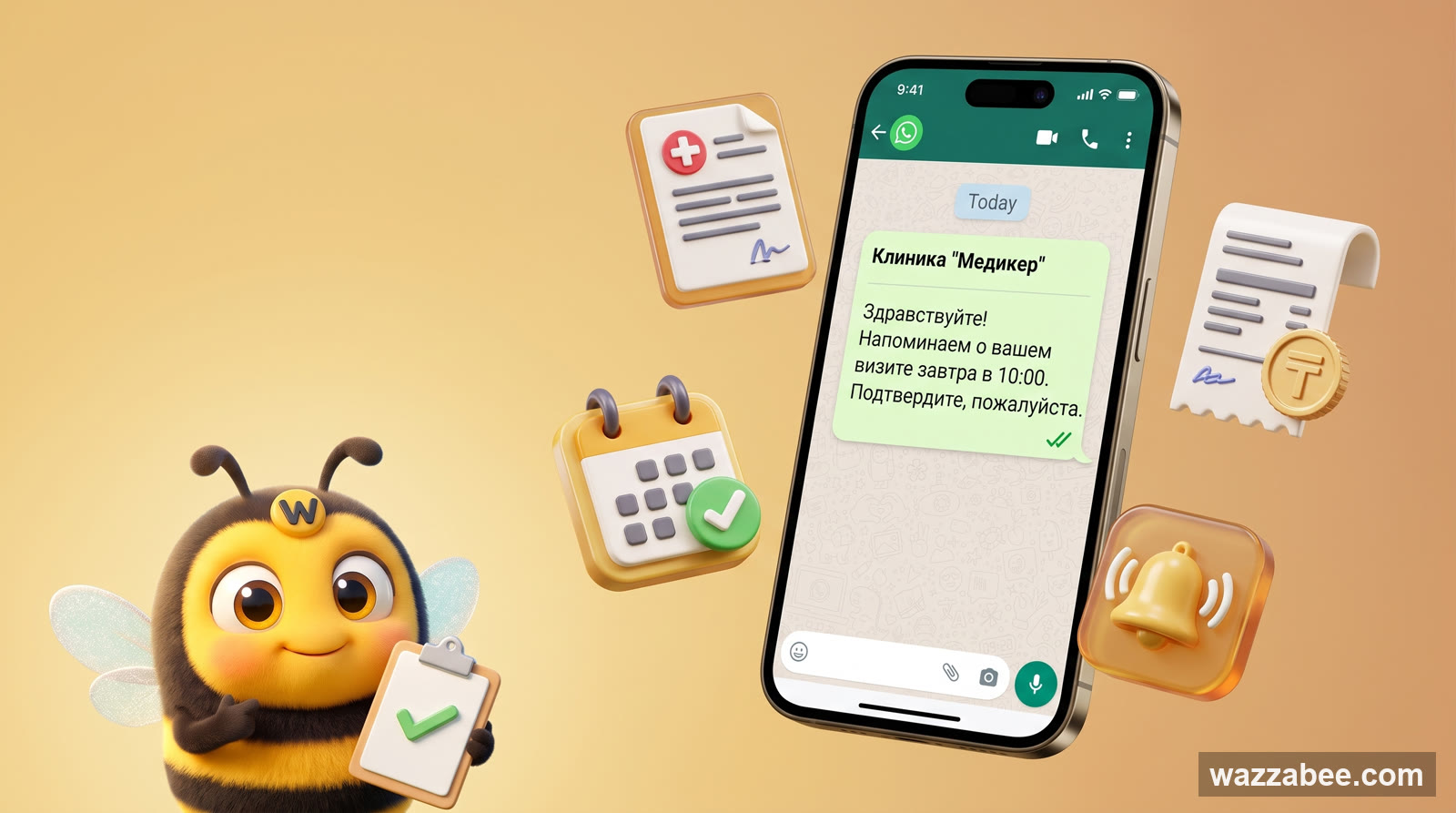
WhatsApp HSM templates in WazzaBee: reaching customers outside the 24-hour window
How clinics, medical centers and service companies use WhatsApp HSM templates in WazzaBee: lab results sent as a link, reminders, invoices, Bitrix24 and CRM robots.
How to Connect Official WhatsApp (WABA): A Step-by-Step Guide for 2026
Official WhatsApp (WABA) takes 15 minutes to set up. What to prepare, how to get through sign-up step by step, what the subscription and messages cost in tenge, what to do if the number is already in the WhatsApp Business app, and what most often derails the process.
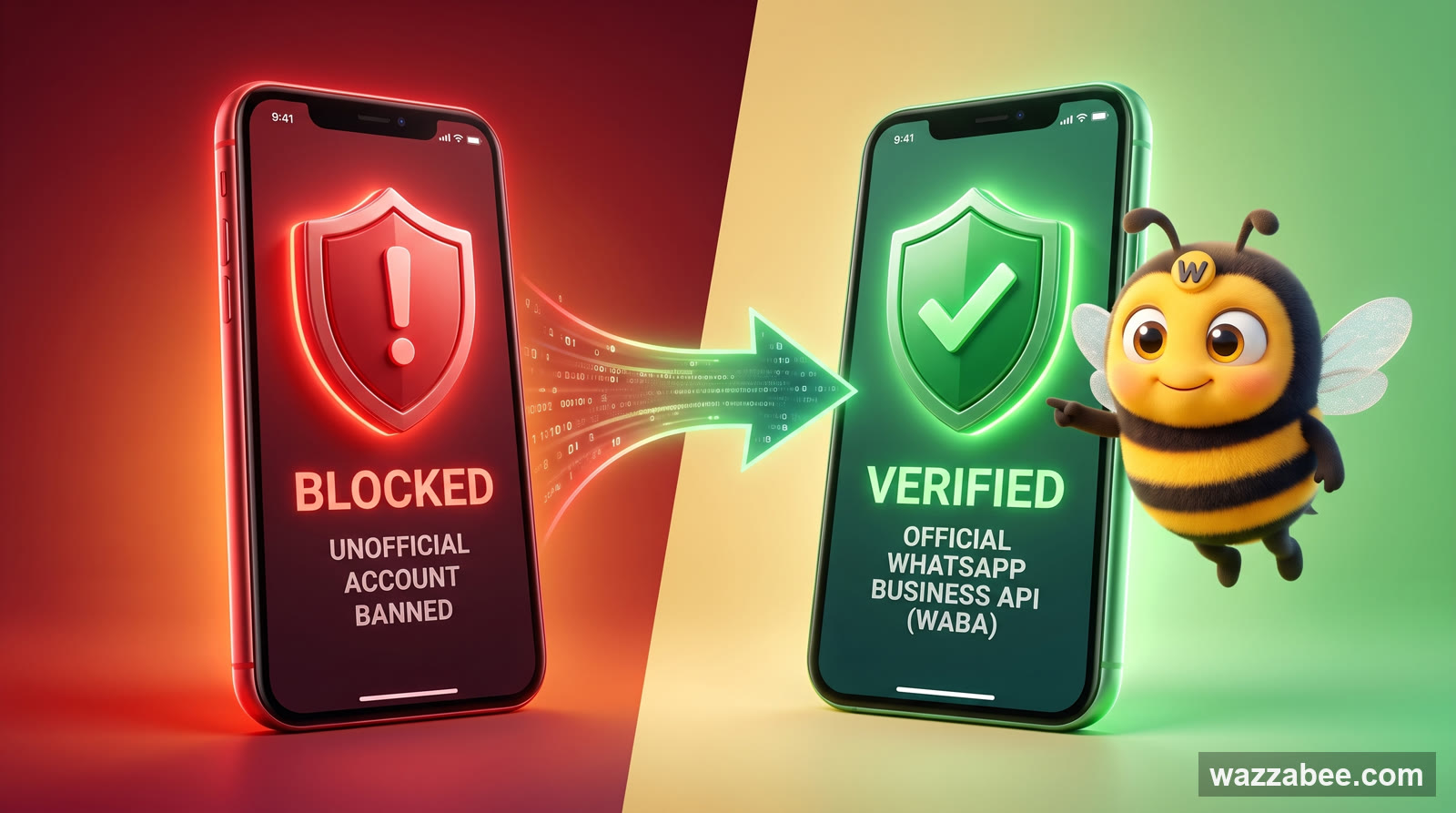
Why Your WhatsApp Got Blocked: What Bans a Business Number and How WABA Gets You Back to Work
Why Meta is banning business WhatsApp accounts en masse in 2026: grey bulk-messaging services, broken rules, customer complaints. What to do the moment you are blocked, and how to move to the official WhatsApp Business API (WABA), which does not get banned for campaigns.